CMGA General Info

Apple blossoms. Photo by Cynthia Murray.

Welcome to the Coconino County Master Gardeners Association

The Coconino Master Gardener Association began in 2009 to create a corps of well-informed volunteers, and to deliver quality horticultural education programs adapted to our regional high elevation environment. The association provides support for Master Gardener graduates and volunteers as well as continuing education and opportunities to participate in community programs that increase the visibility and participation in the Master Gardener Program.


Monthly meetings are held on the 2nd Thursday from 6:00 pm - 8:30 pm
Shepherd of the Hills Lutheran Church
1601 N. San Francisco St. in Flagstaff, Arizona.

On this page you will find:
- How to become a member Membership form
- How to report volunteer and education hours Report your hours
- Upcoming events calendar
- Gardening columns and articles
- Links to other useful websites and resources
- Master Gardener Association documents and forms

Change in Contact Information

Make sure you are receiving the regular emails from Master Gardeners, which are filled with reminders about upcoming events and useful gardening information.Click here to update your contact information!

Event Calendar

Showing posts with label Arizona Native Plant Society. Show all posts

Thursday, May 2, 2024

Native Plant Society Monthly Meeting


May 21, 7pm
Melissa Sevigny - Brave the Wild River: The Untold Story of Two Women Who Mapped the Botany of the Grand Canyon
Melissa Sevigny will present her new book, Brave the Wild River, the remarkable story of an evocative and beautifully written chronicle of botanists Elzada Clover and Lois Jotter’s history-making journey through the Grand Canyon in the summer of 1938. Before Clover and Jotter, no one had yet surveyed the plant life of the Grand Canyon, and they were determined to be the first. Through the vibrant letters and diaries of the two women, Sevigny traces their daring forty-three-day journey down the river, during which they meticulously cataloged the thorny plants that thrived in the Grand Canyon’s secret nooks and crannies. Brave the Wild River is a spellbinding adventure of two women who risked their lives to make an unprecedented botanical survey of a defining landscape in the American West, at a time when human influences had begun to change it forever.
Following the presentation will be a book signing. Purchase your books ahead of time at Bright Side Bookshop. Books will not be available at the event.
Melissa L. Sevigny is a science journalist at KNAU (Arizona Public Radio). She has worked in water policy, sustainable agriculture, and space exploration, and is the author of Under Desert Skies and Mythical River. She lives in Flagstaff, Arizona.
 The meetings are now being held at Highgate Senior Living Center at 1831 N Jasper Dr. on McMillan Mesa at 7 PM. Park anywhere in the parking lot or on the street. Buzz to be let in if the door is locked and come upstairs to the second floor.
If attending virtually, register in advance for this meeting at:
https://bit.ly/FlagAZNPS
After registering, you will receive a confirmation email containing information about joining the meeting.
Arizona Native Plant Society talks are free and open to the public. See aznps.com to become a member.


From Susan Holiday Flagstaff Native Plant Society

Monday, May 1, 2023

Native Plant Society Meeting


 The Brothers Boutelou and the Grass They Barely Knew: A Journey into Botany, History, Exploration, and Two Remarkable Men
 Speaker:  Debbie DeWolf Allen.
 
Botanical names can be challenging to pronounce and to spell, yet they hold a treasure trove of meaning. Latin plant names often describe a distinctive characteristic of the plant, but sometimes they honor a person: some mysterious unknown figure from the past who must have some importance in the botanical world.
 
In this talk by Debbie Allen, we delve into the origin of the name of Blue Grama Grass, Bouteloua gracilis. Blue Grama is native to the southwest, and is charming, distinctive, and easy to identify. The origin of the genus name, Bouteloua, takes us back to a tale that intertwines two Spanish gardeners from the late 1700’s, an enlightened king of Spain, an expedition to explore the New World, and some amazing botanical drawings that were lost for almost 200 years. Come take a fascinating journey that encompasses botany, history, exploration, and the tale of two remarkable men.
 
Debbie DeWolf Allen has always loved nature. She majored in geology in college and fell in love with the wide-open spaces of the west at geology field camp in Montana. She has been certified as a Master Gardener in Harris County, Texas, and Yavapai County, Arizona. She recently released a field guide to local grasses called Common Grasses of the Central Arizona Highlands, available at the Natural History Institute.
 
Register in advance for this meeting:
https://us02web.zoom.us/.../tZMuc...
After registering, you will receive a confirmation email containing information about joining the meeting.

Monday, August 2, 2021

AZ Native Plant Society Monthly Meeting

 The Arizona Native Plant Society is inviting you to a scheduled Zoom meeting.


Topic: Flagstaff AZNPS Talk: Kate Watters - Building Pollinator Habitats
Time: Aug 17, 2021 07:00 PM Arizona

Kate is a farmer, floral designer, writer and visual artist who is wild about plants. She makes her livelihood from Wild Heart Farm, a one-acre oasis in Rimrock, next to Beaver Creek. She grows flowers, medicinal herbs, and pollinator habitat and hosts plant gatherings. She worked in service to wild plant communities for 20 years in the Grand Canyon and across the Colorado Plateau, always aware and curious about plant/pollinator interactions. Kate has developed land-based artist residencies and workshops and co-curated exhibits with scientists and artists to advocate for pollinators and public lands.  To follow her entrepreneurial and artistic adventures arising from the soil visit: www.wildheartfarmaz.com and www.katewattersart.com 

Join Zoom Meeting

Meeting ID: 870 9289 2902
Passcode: 654599
One tap mobile
+13462487799,,87092892902#,,,,*654599# US (Houston)
+16699009128,,87092892902#,,,,*654599# US (San Jose)

Tuesday, June 1, 2021

Flagstaff Native Plant Society Meeting

 Meeting begins at 7pm by Zoom Contact Susan Holiday for details naris123@cs.com.

June 15: Dr. Judith Bronstein – Binders full of Women: Female Scientists in The American Naturalist, 1867-1917 

Historical photo of botany class at ASU

In this talk, Dr. Bronstein looks at the women who were publishing in a leading biological journal, The American Naturalist, in the first fifty years of its publication (1867-1917). How did they enter science, and under what conditions were they able to persist, either as professionals or as publishing amateurs? What lessons can we take away for how to increase diversity in science today?

Judie Bronstein is University Distinguished Professor of Ecology and Evolutionary Biology at University of Arizona. She served as the first (and, to date, only) female Editor-in-Chief of The American Naturalist, the oldest still-publishing scientific journal in the United States. She has a strong interest in the history of science.

Thursday, May 6, 2021

AZ Native Plant Society Meeting

 Jesse Mike presents Dine Native Plants Program: Restoring ecologically and culturally important native plants to the Navajo Nation 

Jesse Mike will discuss an overview of accomplishments, current, and future projects of the Dine Native Plants Program; including greenhouse production, seed collecting, riparian restoration, and incorporating traditional knowledge.  
 
Jesse Mike is originally from Tsaile, AZ and currently lives in Fort Defiance, AZ where he coordinates the Dine Native Plants Program. He is an NAU alumni and has a background in botany and ecology.  

The Arizona Native Plant Society is inviting you to a scheduled Zoom meeting.

Topic: Flagstaff AZNPS Talk: Jesse Mike - Dine Native Plant Program
Time: May 18, 2021 07:00 PM Arizona

Join Zoom Meeting

Meeting ID: 847 9828 6591
Passcode: 583426
One tap mobile
+16699009128,,84798286591#,,,,*583426# US (San Jose)
+12532158782,,84798286591#,,,,*583426# US (Tacoma)

Dial by your location
        +1 669 900 9128 US (San Jose)
        +1 253 215 8782 US (Tacoma)
        +1 346 248 7799 US (Houston)
        +1 646 558 8656 US (New York)
        +1 301 715 8592 US (Washington DC)
        +1 312 626 6799 US (Chicago)
Meeting ID: 847 9828 6591
Passcode: 583426

Thursday, April 1, 2021

Native Plant Society Monthly Meeting


Flagstaff Chapter - Arizona Native Plant Society
Tuesday, April 20th 7pm-8pm via Zoom

Featured Topic: Yellow Bluestem: An Encroaching Invasive Grass

Speaker Biography: Ashley Hall received her B.Sc. in Rangeland Ecology and Management with a minor in Geographic Information Systems from the University of Arizona (UA) in 2009 and a M.Sc. 2011. Her thesis focused on researching nurse plant-protégé interactions between two species of Bursage and Creosote, as well as creating a vegetation map of the Mohawk Mountains and San Cristobal Valley on the Barry M. Goldwater Range. After finishing her M.S., Ashley began working for UA Cooperative Extension as a team member of the Cooperative Rangeland Monitoring Program assisting the Bureau of Land Management in establishing a vegetation monitoring protocol.  Ashley worked for US Fish and Wildlife Service as the Invasive Species Coordinator for Arizona Refuges. She currently works for Gila County Cooperative Extension, focusing on Rangeland Management and Animal Science.

Presentation Description: Non-native species, like Yellow Bluestem (Bothriochloa ischaemum) negatively affect the habitats they invade in many ways including economically, environmentally, and/or ecologically. Yellow Bluestem is a perennial grass introduced to the United States from Europe and Asia in the early 1900s as a way to control erosion and as a forage species. In the past several years, this species has become an emerging invasive in Arizona. Yellow Bluestem has been shown to alter soil function and biota, suppressing the growth of native vegetation. It out-competes native species because it can grow much taller than most native grasses, and creates a sod thick formation by reproducing through underground stems.  While this species was introduced in some parts of the U.S. to provide additional forage for grazing species, Yellow Bluestem is less palatable than natives and is not preferred by cattle, equine, or wildlife. Eradication of this species may require intense management efforts if a new population is not eliminated quickly.

Zoom info:

Friday, September 18, 2020

AZ Botany Symposium


You are Invited to Attend
Arizona Botany 2020 Virtual Symposium 
Celebrating
Arizona’s Native Flora

Via Zoom 

October 5, 6 and 7, 2020
7:00 p.m. to 9:00 p.m. PDT

$10 one-time registration for 3 evenings of presentations and post-meeting video access.

Each session will focus on Arizona's uniquely diverse plant life in regions throughout the state. 

Presentations will be of interest to botanists and home landscape/gardening enthusiasts alike. 

Families, students and non-members are welcome!


Agenda and Online Registration

Wednesday, August 5, 2020

AZ Native Plant Society Meeting

August 18, 7pm Zoom meeting

Inline image

Lois Neff: Nemacladus: history, hunting, and sorting the species

Nemacladus (Campanulaceae), is a genus of 26 mostly desert annuals. I will introduce them through images of the tiny flowers. In the post-apocalypse of my thesis defense and during the Covid-19 quarantine, I decided to put faces to names--that is, I'd read articles by numerous botanists for my study, but knew nothing about them as people. I will present a bit about these botanists and their contributions. Also, I've met and interacted via email with several Nemacladus hunters, and will share how they hunt for Nemacladus. This part of the presentation is partly self-serving, as I would love to have more people looking for the plants, and letting me know when they find them! I will convey some details about what I did for my thesis--enough to give you an idea of the complexity and complications involved in studying Nemacladus.

Lois Neff is a master’s student in Dr. Tina Ayers’ lab at Northern Arizona University studying plant systematics and evolution.

Email flagstaffAZNPS AT gmail.com for the Zoom link and password. This talk will not be recorded.

Image: Nemacladus flowers. Image credit: Lois Neff

Arizona Native Plant Society talks are free and open to the public.


Sunday, July 21, 2019

News from the Native Plant Society

At our meeting last night, Ariel Leonard gave a great presentation on how to use i-phones to take pictures for iNaturalist. She said the forest service would like to have volunteers to take pictures of certain plants and upload them so the data is available to help make land use decisions. If you would like to help with endeavor, contact Ariel at
ariel.leonard@usda.gov.

Botany Bill Suporters

Hello Botany Bill Supporters!!

Quick update! The Botany Bill number is moving forward and we need your help!

A hearing in the House of Representatives Natural Resources Public Lands Subcommittee is scheduled for 10am Thursday, July 18th!

Please sign the letter of support by TOMORROW, Wednesday July 17th at 5:00EST!
We hope to gather 1,000 signatures by the deadline!

Help spread the word!
Please take a minute to forward this email to like-minded friends, colleagues and professional acquaintances and visit the Botany Bill website for more information & helpful resources on increasing bipartisan cosponsorship of this bill!

Many thanks for your interest and support!!
 - Kay Havens, Andrea Kramer, and Krissa Skogen
 
Above from Sue Holiday

Wednesday, July 17, 2019

Native Plant Society Monthly Meeting

Tuesday, August 20: Ahsa Jensen, Grand Canyon’s Federally-Listed Endangered Plant, Sentry Milk- Vetch

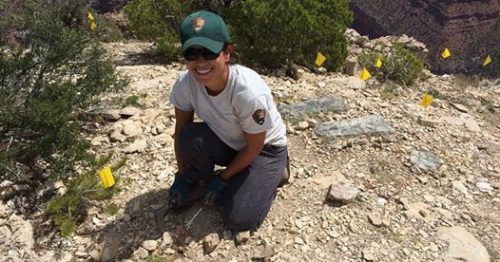
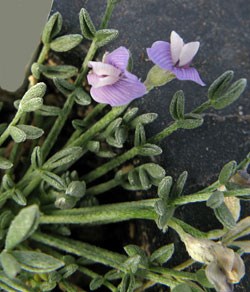
Grand Canyon has one federally-listed endangered plant, the sentry milkvetch (Astragalus cremnophylax var. cremnophylax). The sentry milk-vetch is endemic to Grand Canyon and is only found in soil pockets located in the Kaibab Limestone, on the edge of the canyon. With limited populations, the park’s Science and Resource Management Division has partnered with the U.S. Fish and Wildlife Service, the Arboretum at Flagstaff, and the Grand Canyon Conservancy to implement a recovery plan that includes reintroduction sites to remove the plant from the federal list of Threatened and Endangered Species.
Ahsa Jensen is Grand Canyon’s Native Plant Nursery Manager and has worked with the propagation, outplanting, and monitoring of the sentry milk-vetch for the last six years. She will present on the park’s reintroduction efforts for sites on the south rim of Grand Canyon.


Wednesday, September 6, 2017

AZ Native Plant Society - Flagstaff Chapter


Monthly Meetings
Third Tuesdays at 7pm

Shepherd of the Hills Lutheran Church


 September 19: "The Ancient, the Ugly, and the Nearly Invisible" Dr. Paul Minnis 
The long history of the complex relationships between people and plants in U.S. Southwest and northern Mexico is more than fascinating; it also can be useful! Plant remains recovered from archaeological sites help piece together this story, despite the fact that the remains are often exceptionally small and sometimes seem just plain ugly. Dr. Paul Minnis, Professor of Anthropology Emeritus, University of Oklahoma. Paul Minnis' research focuses on archaeology, prehistoric ethnobotany, cultural ecology and sociocultural evolution, and the prehistoric biodiversity of the southwest US and northern Mexico. 

October 17: "The Plant Communities of Springs" Lawrence E. Stevens, Ph.D.
Larry Stevens is an evolutionary ecologist and the Coordinator of the Museum of Northern Arizona’s Springs Stewardship Institute, which is dedicated to improving understanding and stewardship of springs ecosystems. He also serves MNA as the Curator of Ecology, and is the Senior Ecologist for Grand Canyon Wildlands Council, a conservation organization in Flagstaff. He is a long-time Colorado River whitewater guide, and served as Ecologist for Grand Canyon National Park (1988-1994). He has conducted extensive research on southwestern biogeography, conservation ecology, endangered and non-native species biology, as well as springs, riverine, wetlands, and dam ecology and management. 

Saturday, October 21: Larry Stevens will lead a field trip to Montezuma Well, to explore the great contrasts between vegetation types as we move from springs, to riparian, and then into xeric ecosystems.
To carpool, meet at the OneAZ Credit Union at the corner of Beaver and Butler at 8:30 am. Bring the usual sun protection, water, and your lunch.

Monday, February 20, 2017

Native Plant Society Meeting and Volunteering at Deaver Herbarium

"Flagstaff Area Milkweeds" by Zack Zdinak. 
 
Naturalist and illustrator Zackery Zdinak propagates Asclepias sp. in his native plant garden, and makes specimens available for research. Zack has devoted his life to the love of wildlife and nature, catching frogs and snakes in Connecticut as a child, and later as a peripatetic Wildlife Biologist, Fire Fighter and Interpreter with US Fish & Wildlife, National Forest and National Park Services in Utah and Arizona. In 1998, Zack founded Life Drawing & Education, providing products and services for environmental education, interpretation, and science inquiry programs. He has designed, illustrated and managed interpretive media projects for parks, campgrounds, arboreta, public schools, and non-profit clients in several states. 

Tuesday, March 21, 7 PM at the Museum of Northern Arizona, Pearson Building on the Museum of Northern Arizona’s Research Campus, across from the main campus off HWY 180. Easy to find!  Easy to park! 

Also, Do not forget, plant mounting at the Deaver Herbarium, the first and third Thursday of the month, 1:30 pm, 3rd floor of the Biology Building at NAU.  This month will be March 2nd and 16th.  If you have any questions, contact gkluwin2@gmail.com or vera.markgraf86@gmail.com. Come and enjoy the company of other plant enthusiasts!

Saturday, December 20, 2014

Native Plant Society - Plant Press

Winter 2014 Plant Press available online!


Mexican Tansyaster Psilactis gentryi  Photo by: Bob Herrmann

Winter 2014 Plant Press

The latest beautiful edition of Plant Press is now available online!

Settle in for a good Winter read and learn about native Arizona food plants, soils and their role in plant evolution, and so much more!

Please find Plant Press online by following this link: http://www.aznps.com/documents/2014.12.PP.pdf

Also, take the time to check out the Plant Press archives on our website. http://www.aznps.com  There are so many past issues to be discovered for the first time, or read all over again - enjoy!

Happy Holidays!
Copyright © 2014 Arizona Native Plant Society, All rights reserved.
You are receiving this email because you are a member of Arizona Native Plant Society

Our mailing address is:
Arizona Native Plant Society
PO Box 41206
Tucson, AZ 85717


Post by Dorothy Lamb

Friday, February 24, 2012

Arizona Native Plant Society - Flagstaff Chapter

Spring Program 2012

Tuesday, March 27, 2012 Tina Ayers: Unconfounding the workings of SEINet
Tina Ayers, Associate Professor and Curator of the Deaver Herbarium, NAU, will hold a hands-on training session for those interested in learning the basics of the plant database SEINet, aka the Southwest Environmental Information Network. We will learn how to enter and extract data, make labels, how to create a species list for a site, and review about the many other tools in SEINet offers.(Note: this program is on the 4th Tuesday of March)

Tuesday, April 17, 2012 Michael Kearsley: Grand Canyon National Park Vegetation Mapping
Mike Kearsley, Vegetation Mapping Coordinator for Grand Canyon National Park, has sampled and mapped over 200 plant communities across 1.4 million acres of diverse habitats from Lake Mead to the Kaibab Plateau since 2007. Mike will talk about the many significant range extensions and relocated species that his team has found for Grand Canyon and Arizona during their surveys over the past fifteen years.

Tuesday, May 15, 2012 Jeanne Trupiano & Geoffrey Gross: Coconino County Parks and Open Space
Jeanne Trupiano, Coconino County Parks and Recreation Department Planning and Acquisition Manager, and Geoffrey Gross, CCPR Projects Coordinator, will discuss the county’s program to assess natural areas and acquire lands for conservation around Flagstaff.

Field Trips
Saturday, April 21, 2012 Plant Walk at Homolovi State Park
Susan Holiday, volunteer botanist who is completing a floristic inventory of the park for Arizona State Parks, will be leading the walk. We will be looking at plants of the Navajoan Desert and nearby Little Colorado River. We will also be able to view the ruins and a graveyard dating from the early 1900's on site. A checklist will be available.

Saturday, May 19, 2012 Plant survey of Ft. Tuthill
AZNPS will conduct a survey for rare plants such as Flagstaff pennyroyal and Arizona leatherflower on State Trust land adjacent to Fort Tuthill County Park with Jeanne Trupiano and Geoffrey Gross (see talk on May 15 above). The lands nominated for inclusion in the County Park includes a dense stand of Ponderosa pine trees that has not been logged for nearly 100 years.
For further details click on above title for the AZ Native Plant Society web site or click more to finish this article.